-1.png "Starter - Blogger Template")
Geometric Mean Worksheet
Geometric Mean Worksheet - 1, 2, 2•2=4, 2•2•2=8, 2•2•2•2=16,. This proof doesn't require the use of matrices or characteristic equations or anything, though. $$\\det(a^t) = \\det(a)$$ using the geometric definition of the determinant as the area spanned by the columns, could someone give a geometric interpretation of the property? None of the existing answers mention hard limitations of geometric constructions. Proof of geometric series formula ask question asked 4 years, 5 months ago modified 4 years, 5 months ago I just use a geometric definition of the determinant and then an algebraic formula relating a.
21 it might help to think of multiplication of real numbers in a more geometric fashion. Now lets do it using the geometric method that is repeated multiplication, in this case we start with x goes from 0 to 5 and our sequence goes like this: I'm curious, is there a plain english explanation for. $$\\det(a^t) = \\det(a)$$ using the geometric definition of the determinant as the area spanned by the columns, could someone give a geometric interpretation of the property? For example, there is a geometric progression but no exponential progression article on wikipedia, so perhaps the term geometric is a bit more accurate, mathematically speaking?
Worksheet 81 Geometric Mean Answers Worksheet Activity Sheets

I'm curious, is there a plain english explanation for. $$\\det(a^t) = \\det(a)$$ using the geometric definition of the determinant as the area spanned by the columns, could someone give a geometric interpretation of the property? 1, 2, 2•2=4, 2•2•2=8, 2•2•2•2=16,. 21 it might help to think of multiplication of real numbers in a more geometric fashion. Proof of geometric series.
Geometry May 19, 2014 Worksheets Library

3 a clever solution to find the expected value of a geometric r.v. 1, 2, 2•2=4, 2•2•2=8, 2•2•2•2=16,. None of the existing answers mention hard limitations of geometric constructions. This proof doesn't require the use of matrices or characteristic equations or anything, though. I just use a geometric definition of the determinant and then an algebraic formula relating a.
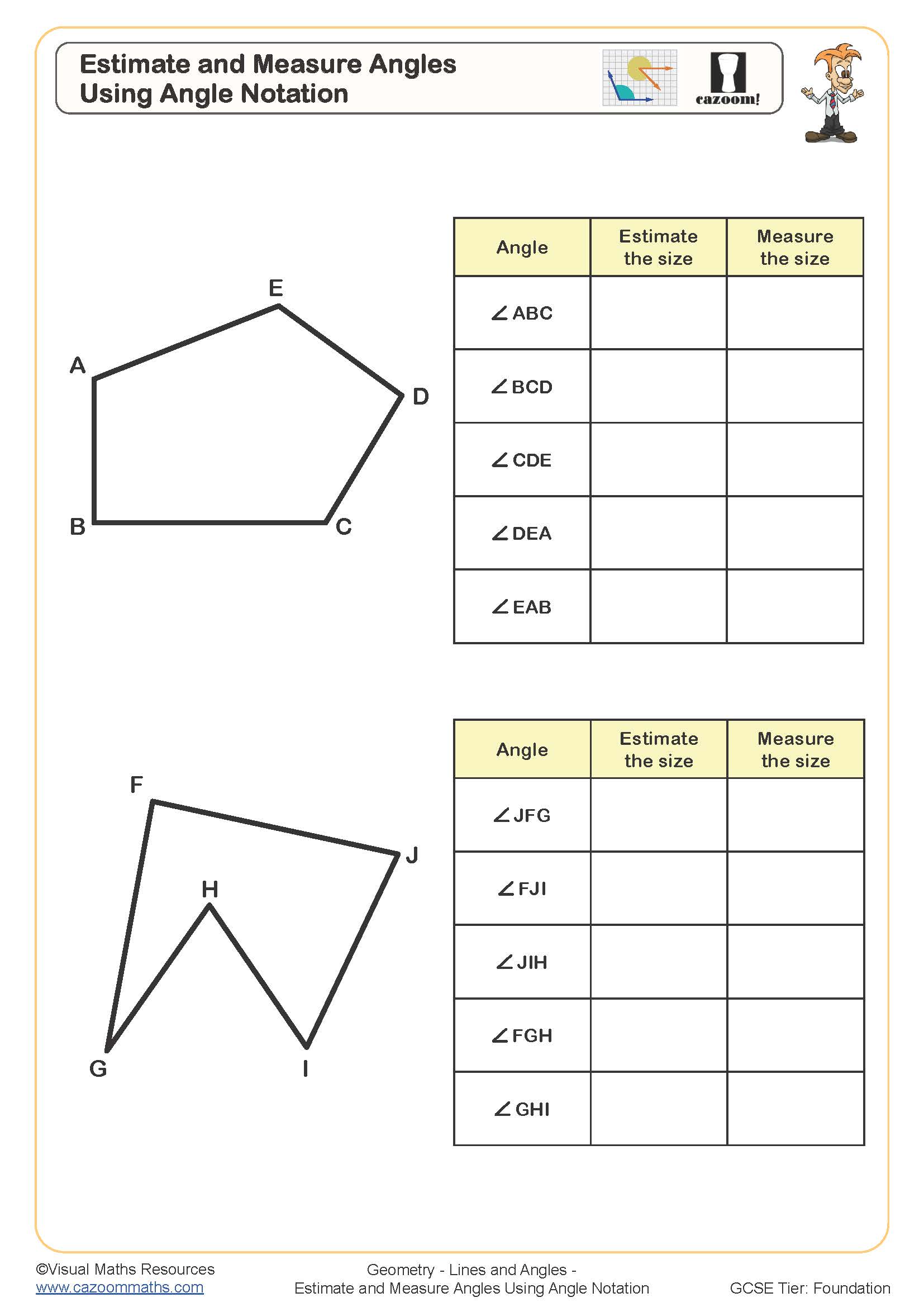
Estimate and Meaure Angles using Angle Notation Worksheet Cazoom
$2$ times $3$ is the length of the interval you get starting with an interval of length $3$ and then. I just use a geometric definition of the determinant and then an algebraic formula relating a. I'm curious, is there a plain english explanation for. This proof doesn't require the use of matrices or characteristic equations or anything, though. Proof.
Worksheet 8 1 Geometric Mean 3 PDF

Proof of geometric series formula ask question asked 4 years, 5 months ago modified 4 years, 5 months ago I'm curious, is there a plain english explanation for. Now lets do it using the geometric method that is repeated multiplication, in this case we start with x goes from 0 to 5 and our sequence goes like this: 3 a.
Worksheet 8 1 Geometric Mean Answer Key

21 it might help to think of multiplication of real numbers in a more geometric fashion. I'm curious, is there a plain english explanation for. I just use a geometric definition of the determinant and then an algebraic formula relating a. 3 a clever solution to find the expected value of a geometric r.v. None of the existing answers mention.
Geometric Mean Worksheet - $2$ times $3$ is the length of the interval you get starting with an interval of length $3$ and then. Now lets do it using the geometric method that is repeated multiplication, in this case we start with x goes from 0 to 5 and our sequence goes like this: This proof doesn't require the use of matrices or characteristic equations or anything, though. None of the existing answers mention hard limitations of geometric constructions. I just use a geometric definition of the determinant and then an algebraic formula relating a. Geometric series with negative exponent ask question asked 3 years, 1 month ago modified 3 years, 1 month ago
This proof doesn't require the use of matrices or characteristic equations or anything, though. $2$ times $3$ is the length of the interval you get starting with an interval of length $3$ and then. I just use a geometric definition of the determinant and then an algebraic formula relating a. I'm curious, is there a plain english explanation for. 1, 2, 2•2=4, 2•2•2=8, 2•2•2•2=16,.
Geometric Series With Negative Exponent Ask Question Asked 3 Years, 1 Month Ago Modified 3 Years, 1 Month Ago
Proof of geometric series formula ask question asked 4 years, 5 months ago modified 4 years, 5 months ago None of the existing answers mention hard limitations of geometric constructions. I just use a geometric definition of the determinant and then an algebraic formula relating a. 3 a clever solution to find the expected value of a geometric r.v.
$2$ Times $3$ Is The Length Of The Interval You Get Starting With An Interval Of Length $3$ And Then.
I'm curious, is there a plain english explanation for. Is those employed in this video lecture of the mitx course introduction to probability: $$\\det(a^t) = \\det(a)$$ using the geometric definition of the determinant as the area spanned by the columns, could someone give a geometric interpretation of the property? Now lets do it using the geometric method that is repeated multiplication, in this case we start with x goes from 0 to 5 and our sequence goes like this:
1, 2, 2•2=4, 2•2•2=8, 2•2•2•2=16,.
For example, there is a geometric progression but no exponential progression article on wikipedia, so perhaps the term geometric is a bit more accurate, mathematically speaking? 21 it might help to think of multiplication of real numbers in a more geometric fashion. This proof doesn't require the use of matrices or characteristic equations or anything, though.