-1.png "Starter - Blogger Template")
Function Or Not Worksheet
Function Or Not Worksheet - It is similar to calling var x = b();, but instead of assigning the return value of. The identifier __func__ is implicitly declared by the translator as if, immediately following the opening brace of each function definition, the declaration: Calling the function with () in a return statement executes the function, and returns whatever value was returned by the function. The difference is that functionone is a function expression and so only defined when that line is reached, whereas functiontwo is a function declaration and is defined as soon as its. 18 generally speaking, the terms parameter and argument are used interchangeably to mean information that is passed into a function. })(document);//this is passed into the function above as for the other questions about the plugins:
The function is executed right after it's created, not after it is parsed. Variables declared in the self executing function are, by default, only available to code within the self executing function. Calling the function with () in a return statement executes the function, and returns whatever value was returned by the function. 509 it's all about variable scoping. The identifier __func__ is implicitly declared by the translator as if, immediately following the opening brace of each function definition, the declaration:
Function vs Not a Function Card Sort Activity Math = Love
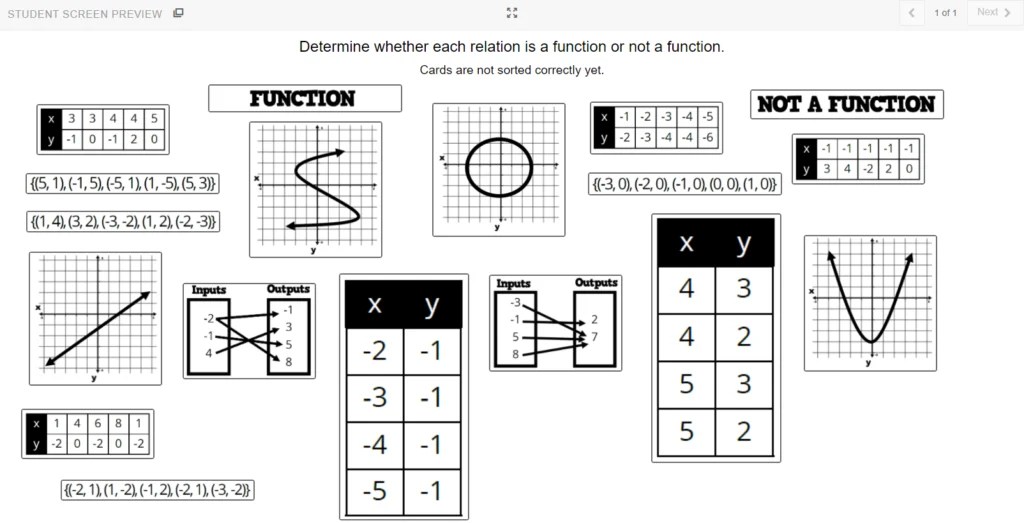
Usually, an immediately invoked function expression (iife) doesn’t explicitly return. A function of that nature can be called at any time, anywhere. Yet, from a function's perspective: 12 the function* type looks like it acts as a generator function for processes that can be iterated. Calling the function with () in a return statement executes the function, and returns whatever.
Check For The Functions Worksheet Worksheets Library
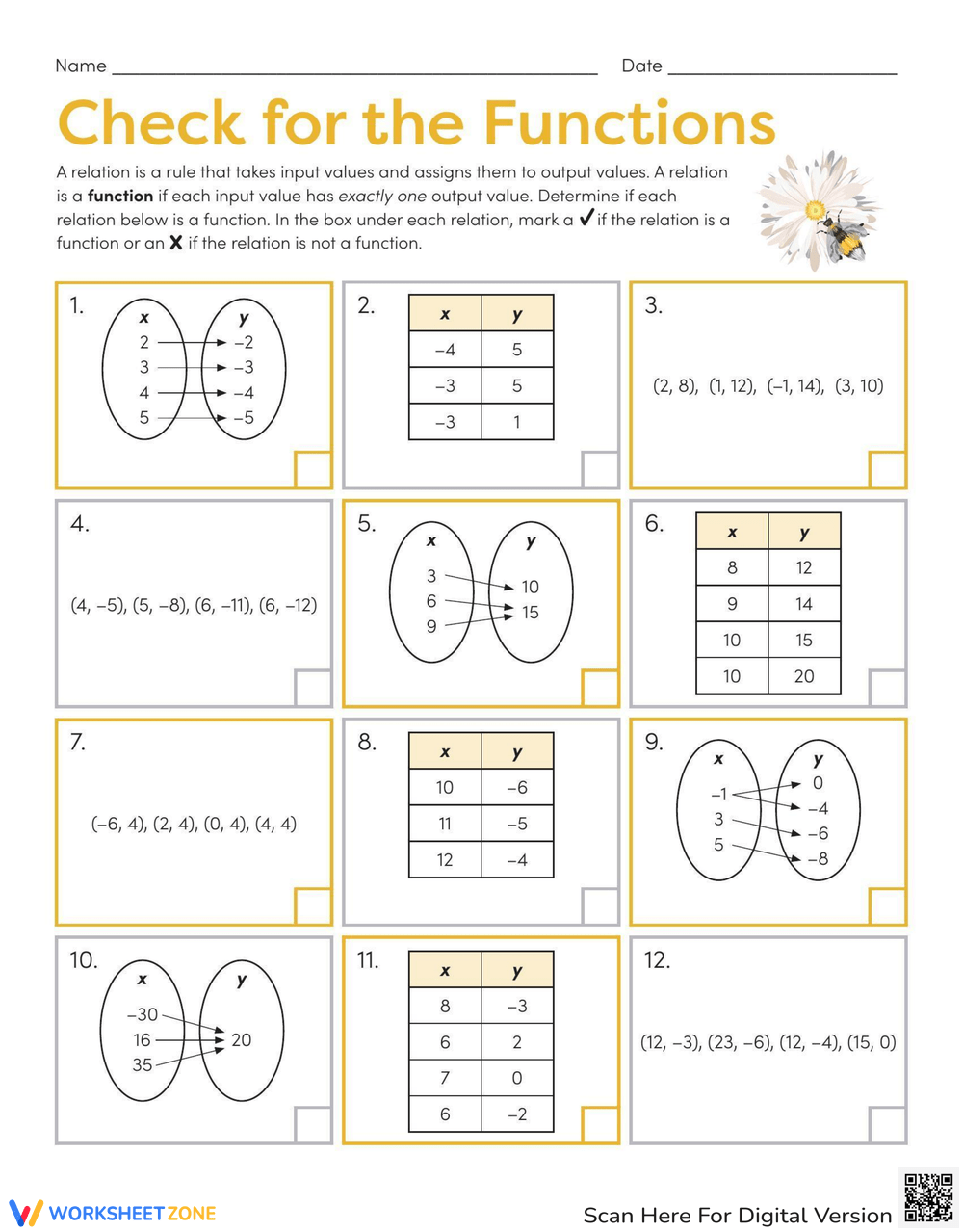
Calling the function with () in a return statement executes the function, and returns whatever value was returned by the function. The entire script block is parsed before any code in it is executed. This allows code to be written without concern of. Makes the expression return a boolean based on the return value of the function. Variables declared in.
Free function notation worksheet answers, Download Free function
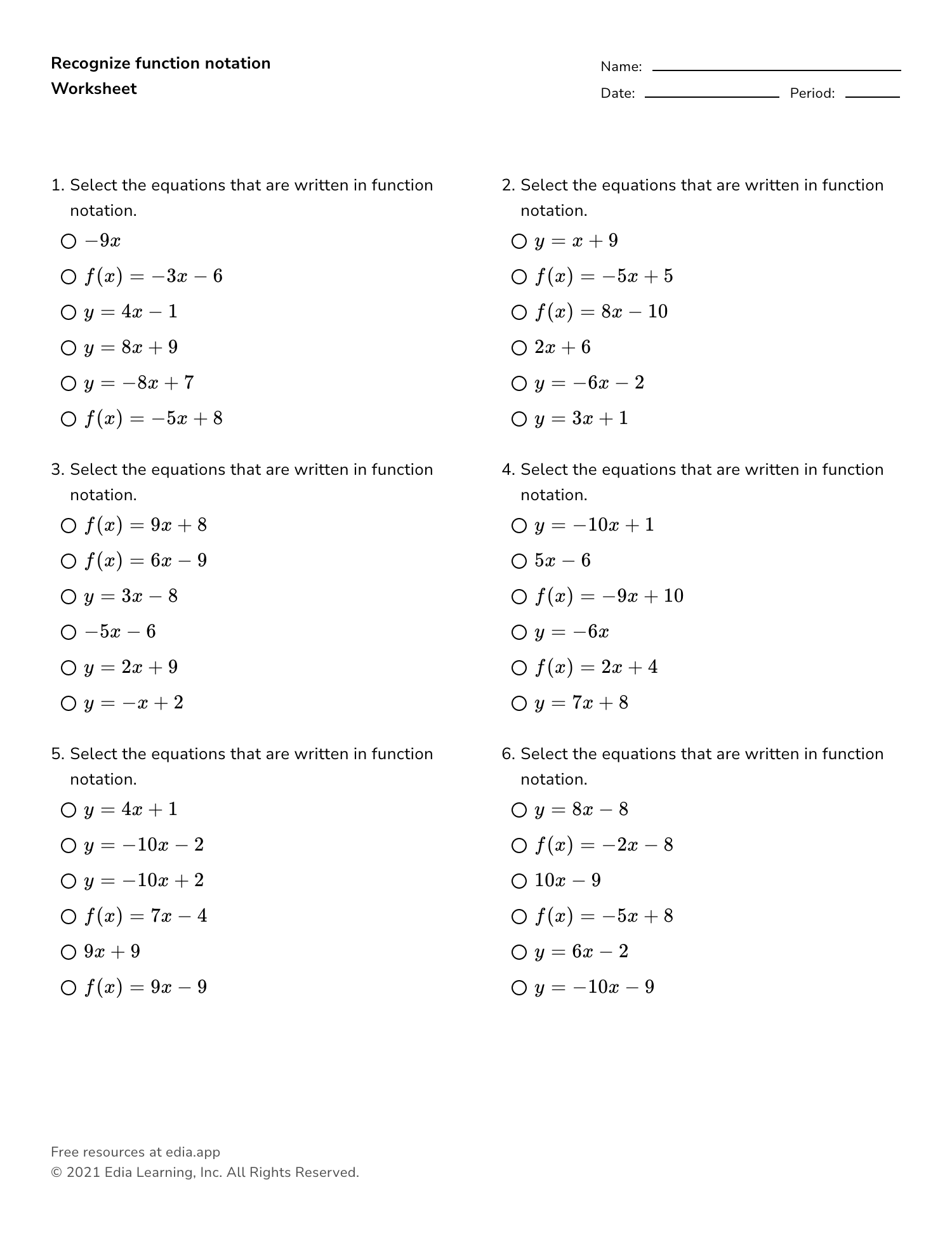
The identifier __func__ is implicitly declared by the translator as if, immediately following the opening brace of each function definition, the declaration: The difference is that functionone is a function expression and so only defined when that line is reached, whereas functiontwo is a function declaration and is defined as soon as its. })(document);//this is passed into the function above.
Edia Free math homework in minutes Worksheets Library
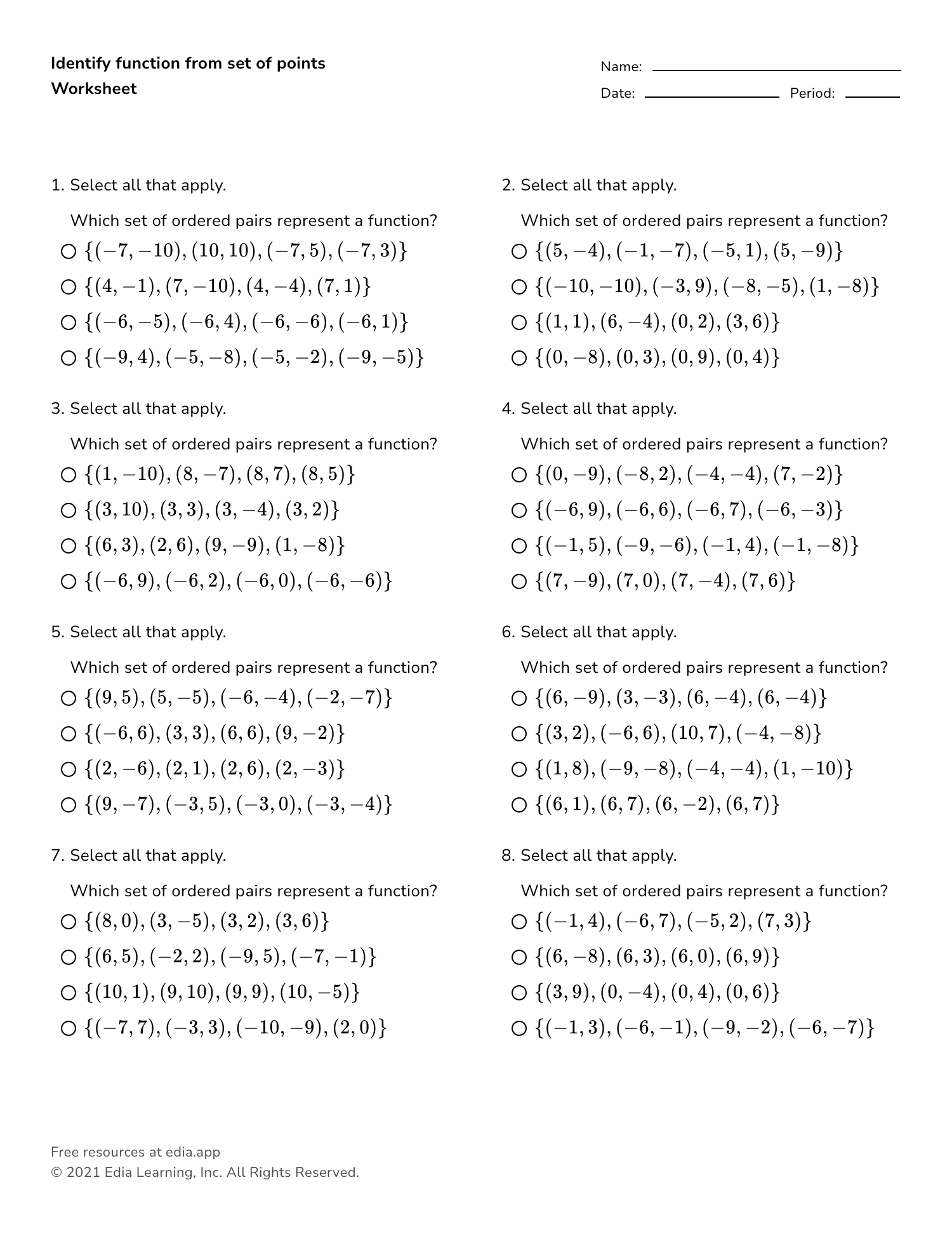
Makes the expression return a boolean based on the return value of the function. })(document);//this is passed into the function above as for the other questions about the plugins: This is not a actually a plugin, it's an object passed. 18 generally speaking, the terms parameter and argument are used interchangeably to mean information that is passed into a function..
Function Not A Function Worksheet Free Worksheets Printable

The function is executed right after it's created, not after it is parsed. Usually, an immediately invoked function expression (iife) doesn’t explicitly return. C# has a feature like this using yield return see 1 and see 2 essentially this returns each. The identifier __func__ is implicitly declared by the translator as if, immediately following the opening brace of each function.
Function Or Not Worksheet - 12 the function* type looks like it acts as a generator function for processes that can be iterated. This allows code to be written without concern of. A function of that nature can be called at any time, anywhere. })(document);//this is passed into the function above as for the other questions about the plugins: The entire script block is parsed before any code in it is executed. It is similar to calling var x = b();, but instead of assigning the return value of.
C# has a feature like this using yield return see 1 and see 2 essentially this returns each. A function of that nature can be called at any time, anywhere. Calling the function with () in a return statement executes the function, and returns whatever value was returned by the function. 18 generally speaking, the terms parameter and argument are used interchangeably to mean information that is passed into a function. The function is executed right after it's created, not after it is parsed.
A Function Of That Nature Can Be Called At Any Time, Anywhere.
})(document);//this is passed into the function above as for the other questions about the plugins: Calling the function with () in a return statement executes the function, and returns whatever value was returned by the function. 12 the function* type looks like it acts as a generator function for processes that can be iterated. It is similar to calling var x = b();, but instead of assigning the return value of.
C# Has A Feature Like This Using Yield Return See 1 And See 2 Essentially This Returns Each.
Makes the expression return a boolean based on the return value of the function. Usually, an immediately invoked function expression (iife) doesn’t explicitly return. 18 generally speaking, the terms parameter and argument are used interchangeably to mean information that is passed into a function. This is not a actually a plugin, it's an object passed.
The Difference Is That Functionone Is A Function Expression And So Only Defined When That Line Is Reached, Whereas Functiontwo Is A Function Declaration And Is Defined As Soon As Its.
The identifier __func__ is implicitly declared by the translator as if, immediately following the opening brace of each function definition, the declaration: The function is executed right after it's created, not after it is parsed. This allows code to be written without concern of. Jquery (a library built on javascript) has built in functions that generally required the dom to be fully rendered before being called.
Variables Declared In The Self Executing Function Are, By Default, Only Available To Code Within The Self Executing Function.
509 it's all about variable scoping. Yet, from a function's perspective: The entire script block is parsed before any code in it is executed.