-1.png "Starter - Blogger Template")
Dihybrid Punnett Square Worksheet
Dihybrid Punnett Square Worksheet - Set up a punnett square using the following information: This lesson teaches students how to do a dihybrid cross using a punnett square. Set up a punnett square using the following information: • dominate allele for black fur in guinea pigs = b • recessive allele for white fur in guinea pigs =b • dominate allele for rough fur in. Set up a punnett square using the following information: 1.set up a punnett square using the following information:
Determine genotypic and phenotypic ratios. Determine the offspring expected when two pea. Determine letters you will use to specify traits. The worksheet provides extra practice for beginning genetics students. This worksheet illustrates how gametes.
Dihybrid Square Practice Worksheet Answer Key

Set up a punnett square using the following information: • dominate allele for black fur in guinea pigs = b • recessive allele for white fur in guinea pigs =b • dominate allele for rough fur in. Determine the offspring expected when two pea. • dominate allele for tall plants = d • recessive allele for dwarf plants = d.
Square Worksheet Merrillville Community School

Cross a homozygous dominant parent for both traits with a heterozygous parent for both traits. Make your punnett square and make gametes step 5: What is the probability of producing tall. • dominate allele for tall plants = d • recessive allele for dwarf plants = d • dominate allele for purple. Get a comprehensive understanding of dihybrid crosses with.
Dihybrid Squares Instructions Interactive PPT Worksheets Library

• dominate allele for tall plants = d • recessive allele for dwarf plants = d • dominate allele for purple. Teaching dihybrid crosses can be challenging because it involves layering several biological concepts, like independent assortment and statistics. Complete cross and determine possible offspring. Create a punnett square that shows the genotypes of all the possible offspring that could.
Dihybrid Cross Square Worksheet
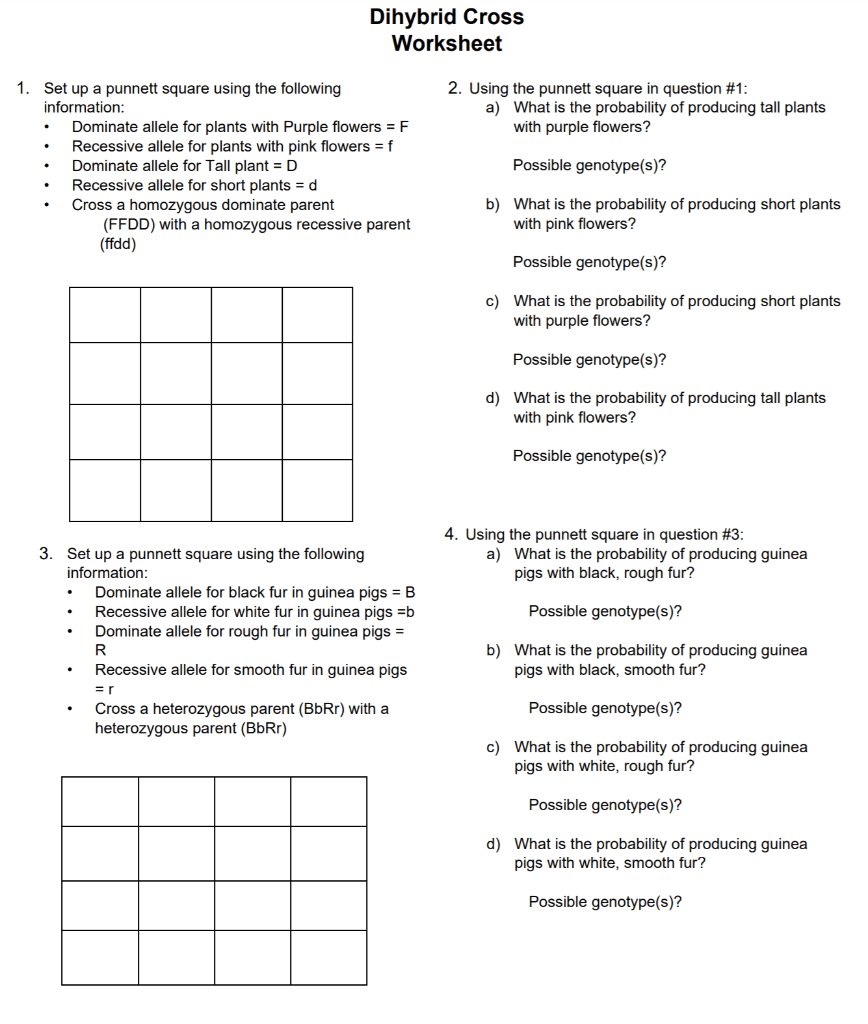
Set up a punnett square using the following information: Determine the offspring expected when two pea. Handy for biology classes studying genetics! Label the rows and columns with the possible gametes. • dominate allele for black fur in guinea pigs = b • recessive allele for white fur in guinea pigs =b • dominate allele for rough fur in.
Dihybrid Square Practice Study notes Docsity

Set up a punnett square using the following information: • dominate allele for normal coat color in wolves = n • recessive allele for black coat color in wolves = n • dominant allele for brown. Set up a punnett square using the following information: Aligned with next generation science standards (ngss), this. Students examine how the trait black or.
Dihybrid Punnett Square Worksheet - • dominate allele for black fur in guinea pigs = b • recessive allele for white fur in guinea pigs =b • dominate allele for rough fur in. Cross a homozygous dominant parent for both traits with a heterozygous parent for both traits. Version two has four of them. Construct a punnett square to visualize the potential genotypes of offspring resulting from the cross between the parental organisms. • dominate allele for tall plants = d • recessive allele for dwarf plants = d • dominate allele for purple. Label the rows and columns with the possible gametes.
Set up a punnett square using the following information: This lesson teaches students how to do a dihybrid cross using a punnett square. Determine genotypic and phenotypic ratios. Determine genotypic and phenotypic ratios. • dominate allele for normal coat color in wolves = n • recessive allele for black coat color in wolves = n
Make Your Punnett Square And Make Gametes Step 5:
Make your punnett square and make gametes step 5: Determine letters you will use to specify traits. 1.set up a punnett square using the following information: In the following plants round seed shape is dominant over wrinkled seed shape and yellow seed color is dominant over green seed color.
Complete Cross And Determine Possible Offspring.
Construct a punnett square to visualize the potential genotypes of offspring resulting from the cross between the parental organisms. Determine genotypic and phenotypic ratios. Label the rows and columns with the possible gametes. • dominate allele for tall plants = d • recessive allele for dwarf plants = d • dominate allele for purple flowers = w • recessive.
• Dominate Allele For Normal Coat Color In Wolves = N • Recessive Allele For Black Coat Color In Wolves = N • Dominant Allele For Brown.
This lesson teaches students how to do a dihybrid cross using a punnett square. Determine what kind of problem you are trying to solve. Students will determine the genotypes of the parents, fill in the 16 box punnett squares, and answer questions about. Set up a punnett square using the following information:
Cross A Homozygous Dominant Parent For Both Traits With A Heterozygous Parent For Both Traits.
Get a comprehensive understanding of dihybrid crosses with our dihybrid cross worksheet and answer key, available in both pdf and doc format. • dominate allele for black fur in guinea pigs = b • recessive allele for white fur in guinea pigs =b • dominate allele for rough fur in. Set up a punnett square using the following information: Create a punnett square that shows the genotypes of all the possible offspring that could result from the breeding of two of the rodents that are heterozygous for both traits.